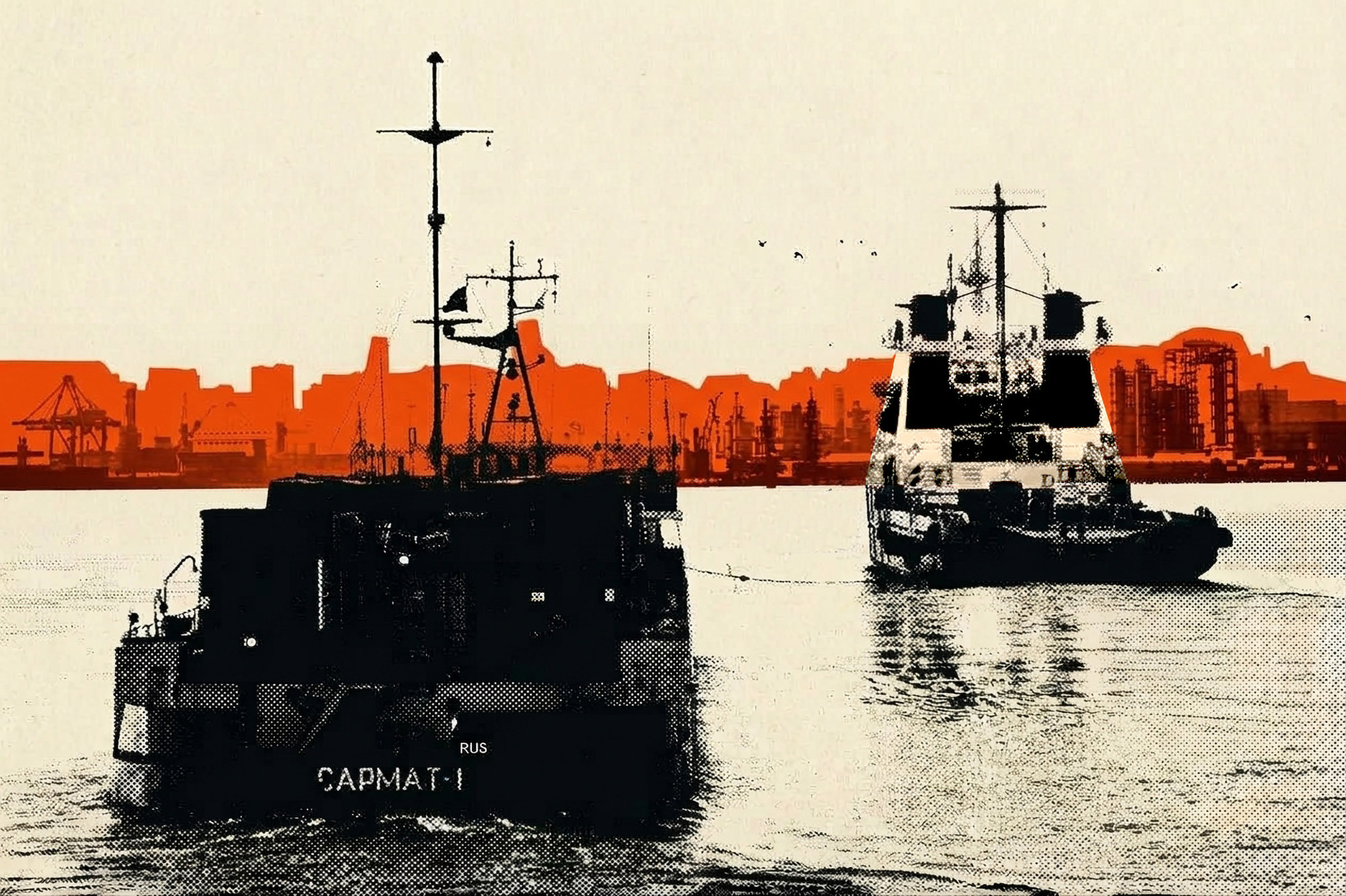
From the start of the war in Ukraine, Black Sea Fleet forces shelled Ukraine with Calibers not only from Project 11356R and 11661K frigates and Project 21631 MRKs, covered in previous instalments of this series. Submarines were also used — the Varshavyanka-class Project 636.3 boats. Continuing our series on missile carriers, this article provides a general overview of the Black Sea Fleet's submarine component, its current status, and combat record.
IntroductionHistorical Context
During the Soviet era, the Black Sea Fleet maintained a full submarine component designed to counter NATO carrier fleets — the basis of the so-called "Gorshkov Doctrine," named after Admiral Sergei Gorshkov, who advocated developing the Soviet Navy around missile carriers and nuclear submarines capable of carrying nuclear weapons.
With the collapse of the Soviet Union, however, this doctrine was effectively abandoned. After the sweeping cuts and division of the Black Sea Fleet in the 1990s, the Russian naval forces were left with only one submarine — the Alrosa, Project 877V Palтus.
The revival of Russia's Black Sea submarine fleet began with the State Armament Programme 2011–2020, one goal of which was maintaining operational capability in the Black Sea[1]. But the ambition had shifted — less about directly confronting NATO fleets, more about a flexible force covering Russia's southern flank[2]: arming the Black Sea and Caspian fleets en masse with Calibers was meant to create Anti-Access / Area Denial (A2/AD) conditions[3]. So between 2010 and 2014, six submarines were laid down at the Admiralty Shipyards in St. Petersburg specifically for the Black Sea Fleet — all Project 636.3.
Project 636, developed by the TsKB MT Rubin design bureau, is a modification of Project 877 with extensive acoustic-dampening technology. Until 2010 Varshavyankas were built for export — to China, Algeria, and Vietnam[4]. The boats built for the Black Sea Fleet were the third-generation Varshavyankas, armed with four Caliber-PL missiles[5][6] fired from torpedo tubes. Unlike the Buyan-M MRKs or Project 11356R frigates, Western sanctions after 2014 did not halt construction: the engines on Varshavyankas are entirely Russian-designed, produced at the Kolomna Plant in the Moscow Region, among others.
A Structural Feature That Became Critical
Project 636 boats require maintenance every 3.5 years and major overhaul every ten. Until 2022 this was handled by the Kronstadt Maritime Plant — meaning the Varshavyankas regularly left the Black Sea for the Baltic. After the Bosphorus closed, that scheme collapsed, and repair at Sevastopol became impossible due to the risk of missile strikes.
BrigadeThe 4th Separate Submarine Brigade and Its Combat Record
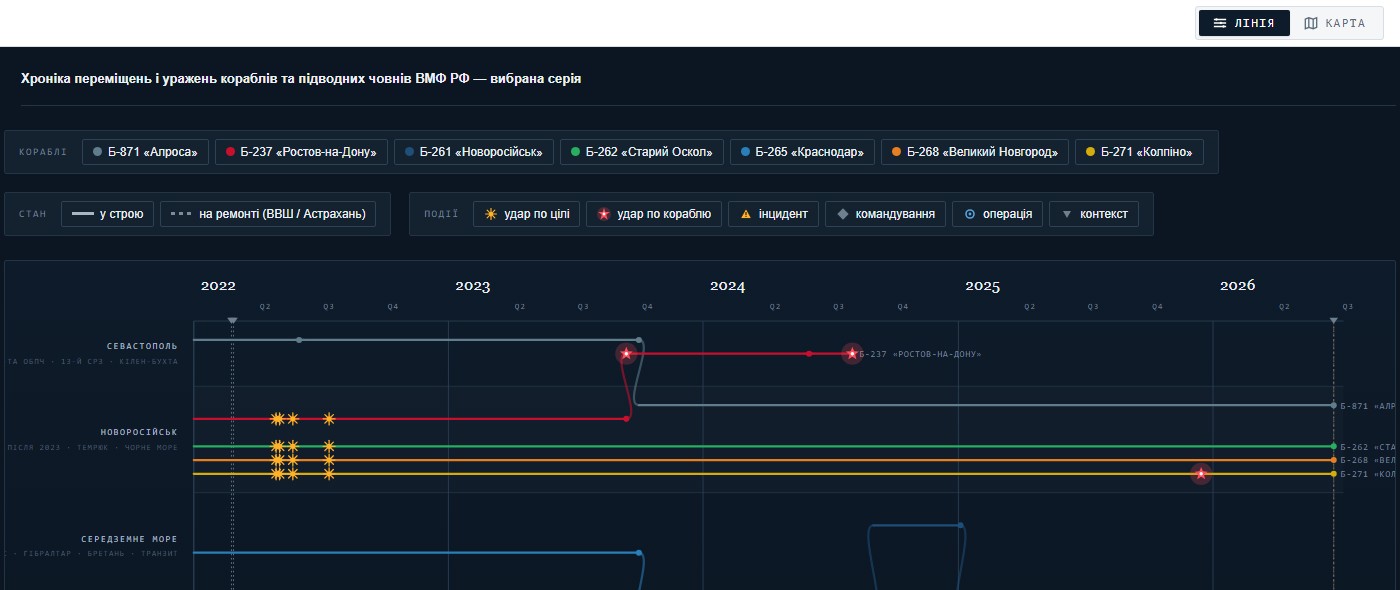
On 1 December 2014, the 4th Separate Submarine Brigade was formed within the Black Sea Fleet, based on the 247th Separate Submarine Division. The brigade currently numbers seven submarines — the entire submarine component of the BSF. Over time it gained combat experience in Syria and Ukraine. In the Syrian campaign, six Varshavyankas participated — almost the entire brigade. Regarding Ukraine, the 4th Brigade carried out Caliber launches on at least three occasions: 29 April, 4 May and 23 May 2022 — according to official Russian Ministry of Defence statements[7].
The brigade is formally based at South Bay in Sevastopol, but in practice operates from the Novorossiysk Naval Base. Current brigade composition:
| Hull / Name | Project | In BSF Since | Status | Location | Notes |
|---|---|---|---|---|---|
| B-871 Alrosa | 877V Palтus | 30.12.1990 | Undamaged | Novorossiysk | De facto not a Caliber carrier — no confirmed launches |
| B-237 Rostov-on-Don | 636.3 | 30.12.2014 | Destroyed | — | Hit 13.09.2023 (Storm Shadow), sunk 02.08.2024 (ATACMS) |
| B-261 Novorossiysk | 636.3 | 22.08.2014 | Outside Black Sea | Kronstadt | Outside Mediterranean since 02.01.2025. Fuel system malfunction. |
| B-262 Stary Oskol | 636.3 | 03.07.2015 | Active | Novorossiysk | Per satellite imagery of October 2024 |
| B-265 Krasnodar | 636.3 | 05.11.2015 | Outside Black Sea | Kronstadt | Returned from Mediterranean 09.05.2025. Not back in Black Sea since start of invasion. |
| B-268 Veliky Novgorod | 636.3 | 26.10.2016 | Active | Novorossiysk | Per satellite imagery of October 2024 |
| B-271 Kolpino | 636.3 | 24.11.2016 | Likely damaged | Novorossiysk | Possibly struck by Sub Sea Baby underwater drone 15.12.2025 |
B-871Alrosa · Project 877V Palтus
Alrosa is the oldest submarine in the 4th Brigade and the only Project 877V Palтus vessel in the BSF. Laid down in May 1988 at the Krasnoe Sormovo plant in Gorky, launched September 1989, and officially commissioned into the Black Sea Fleet on 30 December 1990. The boat has one unique structural feature: instead of a conventional propeller it uses a water-jet propulsor, which theoretically provides greater stealth.
With the collapse of the USSR, Alrosa experienced an unusual episode: in March 1992 part of the crew attempted to seize the submarine and swear allegiance to Ukraine, but after the final division of the fleet the boat went to Russia.
Until 2013 Alrosa remained the only combat-capable submarine in the Black Sea Fleet. In July 2014 she entered refit and modernisation at the 13th Ship Repair Plant in Sevastopol. The work was originally planned for 2015 completion, but chronic underfunding and technical difficulties stretched the repair to eight years.
In June 2022, already after the full-scale invasion began, Alrosa finally left the yard. Russian sources — TASS and Lenta.ru, citing sources in Sevastopol's security services — reported that modernisation had made the boat a Caliber-PL carrier and she had joined the 4th Separate Brigade. A planned transfer of Alrosa to the Baltic Fleet for training Varshavyanka crews was cancelled.
Yet over four years of active war Alrosa has not carried out a single confirmed Caliber launch — neither against Syria nor Ukraine. The reasons were never officially explained. Most likely: technical unreliability after the prolonged refit and limited real integration of Calibers into the combat system of a 1980s-era submarine. Whether Alrosa is a genuine cruise missile carrier in practice, rather than merely on paper, remains an open question.
The last known commanding officer is Ivan Fyodorov: his entire career was on submarines of the Northern, Baltic, and Black Sea fleets[8].
Per satellite imagery, until October 2023 Alrosa was based at Sevastopol[9]; as of October 2024 — at Novorossiysk.
B-237Rostov-on-Don · Project 636.3 Varshavyanka
Rostov-on-Don was the first submarine of the 4th Brigade to commission under the new state order: laid down 21 November 2011 at the Admiralty Shipyards, launched 26 June 2014, officially handed over to the fleet on 30 December of the same year. Before arriving at her permanent base at Novorossiysk, she gained combat experience in Syria: on 8 December 2015, Rostov-on-Don carried out Caliber launches from submerged position in the Mediterranean — the first underwater cruise missile launch in the Black Sea Fleet's history. During 2020 the submarine participated in "combat training" missions.
First Confirmed Strike on a Submarine by a Cruise Missile in History
The Storm Shadow strike in the night of 13 September 2023 caught Rostov-on-Don in the dry dock of the Sevastopol Maritime Plant during scheduled maintenance. Along with her, the large landing ship Minsk sustained serious damage. This was the first confirmed instance in history of a submarine being struck by a cruise missile. The tandem warhead design of Storm Shadow, according to Militarnyi's assessment, likely allowed penetration of the pressure hull before detonation.
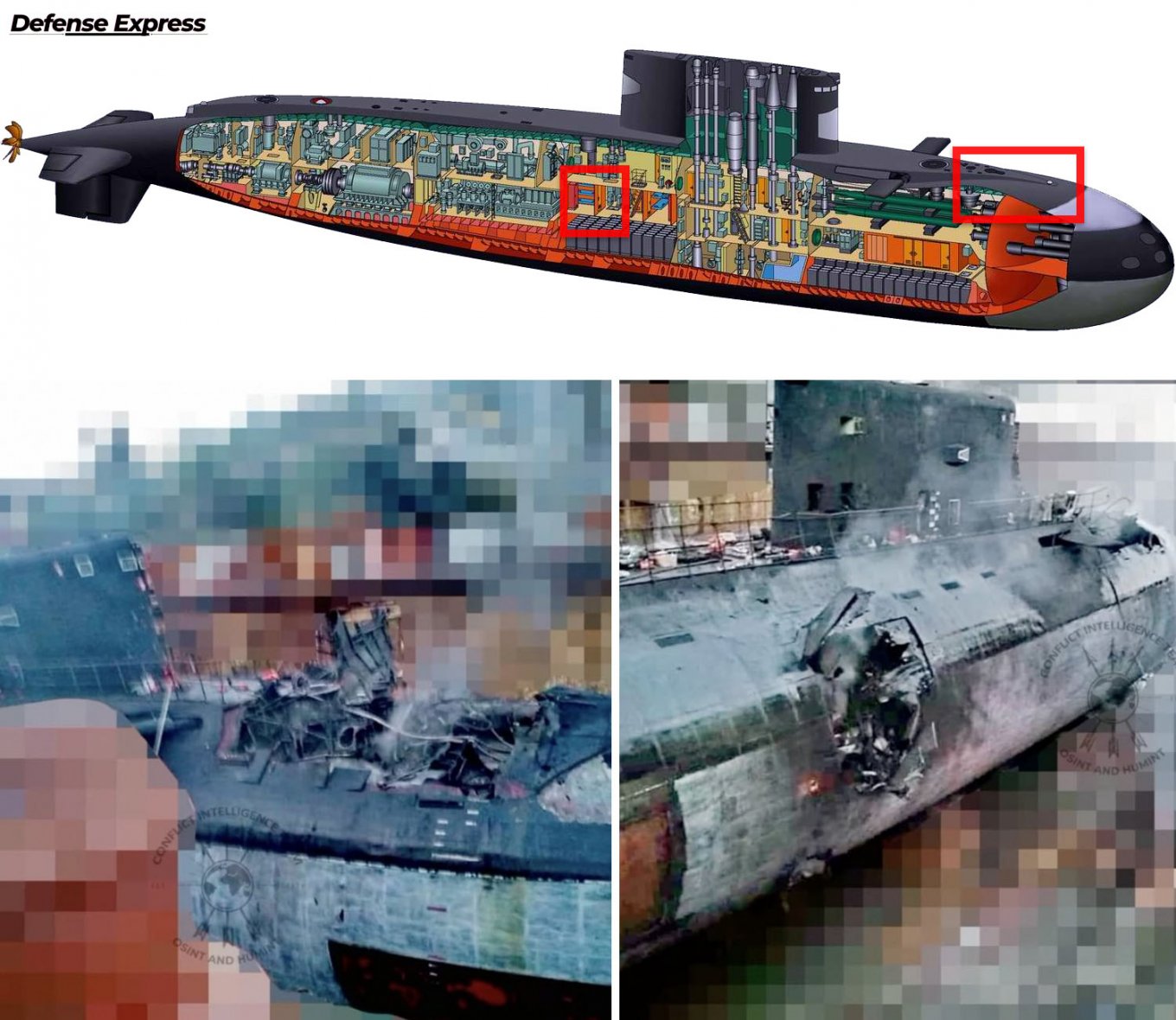
Despite the scale of the damage, Russia immediately announced plans to repair the submarine. Over the following months Rostov-on-Don remained in the same dock — partially concealed by camouflage netting. In June 2024 she was transferred to the 13th Ship Repair Plant in Kilen Bay; Russian sources promised completion by mid-2024.
First Russian Submarine Destroyed in This War
In the night of 2 August, Ukraine's Defence Forces struck Sevastopol. According to the General Staff of the Armed Forces of Ukraine, Rostov-on-Don sank in place — eleven months after the first strike and less than two months after being transferred to the new plant. Simultaneously, four S-400 Triumph launchers were destroyed.
The exact weapon used for the final strike has not been officially confirmed. Russian sources and local Telegram channels reported ATACMS use, and this version appears plausible to some Ukrainian experts given the Russian air defence's inability to intercept ballistic missiles. However, naval expert Volodymyr Zablotsky of Defence Express expressed doubt: cluster ATACMS is structurally suited for striking airfields and concentrations of equipment, not ships. The most likely explanation is a combined strike — but no verified data on the specific weapon type is available.
Adamsky Andrey (2013–2017, decorated for the Syrian campaign), Aleksandrov Alexander (2017 – September 2022), Belov Alexander and Shveda Igor (2021–2024, later commanding officer of B-261 Novorossiysk).
B-261Novorossiysk · Project 636.3 Varshavyanka
The lead ship of the Project 636.3 series — Novorossiysk was laid down 20 August 2010 at the Admiralty Shipyards, launched 28 November 2013. On 22 August 2014 the St. Andrew's flag was raised aboard, after which she underwent trials at Northern Fleet ranges and arrived at Novorossiysk. Like most boats of the brigade, Novorossiysk gained combat experience in Syria as part of the Mediterranean operational task force.
From 2019 the boat regularly transited between the Mediterranean and Kronstadt — constantly requiring technical maintenance. In February 2021 Novorossiysk entered repair and modernisation; return to service was deferred from April to September 2024. That prolonged absence from the Black Sea proved decisive: with the full-scale invasion under way, a return there turned out to be blocked — Turkey had closed the Bosphorus to warships.
In September 2024 Novorossiysk sailed for the Mediterranean to Tartus, relieving another Varshavyanka — the Ufa from the Pacific Fleet. But already in December, after Assad's fall and Russia's loss of the Tartus base, the boat left the region. On 4 January 2025 Portuguese naval forces recorded her passage through Gibraltar — the last Russian submarine to leave the Mediterranean.
Return on the Surface — and Under Tow
The return proved telling. On 13 October NATO Maritime Command recorded Novorossiysk on the surface off the Brittany coast — a French frigate deployed to observe. The Netherlands reported seeing the submarine under tow in the North Sea. Russia officially denied any problems, citing a "planned inter-fleet transit."
The reasons for surfacing were not independently verified. The anonymous Telegram channel VChK-OGPU, citing sources in Russian security services, reported a fuel system failure: diesel fuel allegedly flowing directly into the bilge, with no spare parts or specialists aboard to fix it. French media — Le Figaro and France 24 — picked up the account, but the primary source remains singular and anonymous. The only independently confirmed fact: the boat was transiting on the surface, under tow.
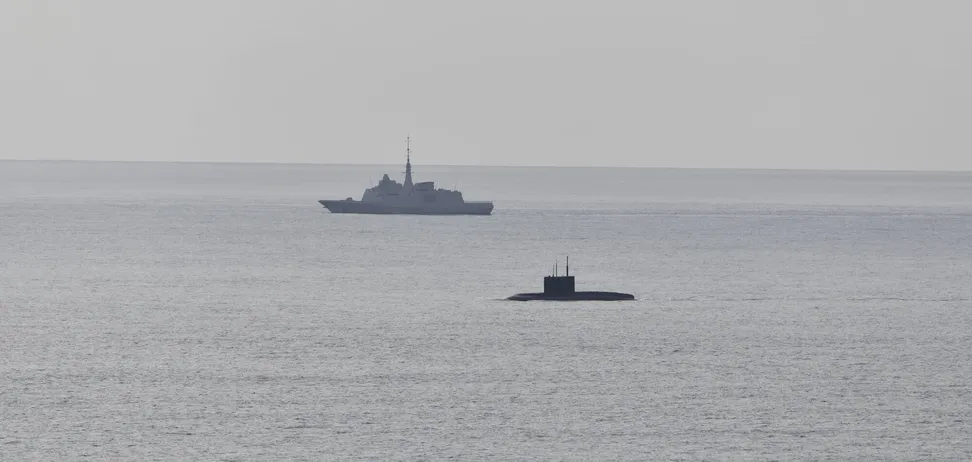
NATO Secretary General Mark Rutte reacted sarcastically, noting that Novorossiysk in the Mediterranean had been "hunting for the nearest mechanic."
B-262Stary Oskol · Project 636.3 Varshavyanka
Laid down 17 August 2012 at the Admiralty Shipyards, B-262 was launched and officially handed over to the Russian Navy on 3 July 2015. On 1 July 2016 Stary Oskol arrived at Novorossiysk and joined the 4th Brigade — the third of the six Varshavyankas.
From April 2019 to January 2020 the boat carried out combat training missions in the Mediterranean; in June 2021 she participated in Russian Navy exercises there. At the time of the full-scale invasion in February 2022, Stary Oskol — according to Covert Shores — was in the Black Sea, unlike Krasnodar and Novorossiysk which were in the Mediterranean.
Dudukin Alexander — has commanded B-262 since June 2021.
Regarding Stary Oskol's participation in strikes against Ukraine, no open verified data on specific launches is available. Defence Express in December 2025 directly noted: a version exists that B-262 may have been involved in the strike on Vinnytsia — but it remains unconfirmed. Per satellite imagery of October 2024, Stary Oskol is at Novorossiysk and is considered one of the two remaining combat-capable Caliber carriers in the Black Sea.
B-265Krasnodar · Project 636.3 Varshavyanka
Laid down 20 February 2014 at the Admiralty Shipyards, Krasnodar was launched in April 2015 and officially commissioned into the Russian Navy on 5 November 2015. On 9 August 2017 she arrived at Sevastopol. She gained combat experience in Syria — on 31 May and 23 June 2017 she carried out Caliber launches against Syrian territory.
Since then the boat has been almost permanently in the Mediterranean or under repair at Kronstadt — and has never once returned to the Black Sea. At the time of the full-scale invasion Krasnodar was in the Mediterranean together with Novorossiysk, per Covert Shores. In September 2022 Novorossiysk left for the Baltic, and Krasnodar remained the last Russian submarine in the Mediterranean — until October 2023, when she too headed for Kronstadt. On 9 May 2025 the British Royal Navy confirmed observing Krasnodar during her return transit through the English Channel to the Baltic. As of June 2026 — Kronstadt.
The first known commanding officer is Captain 2nd rank D. Sopin (November 2015 – December 2016); before his appointment to Krasnodar he commanded Alrosa.
His successor — Kostiantyn Petrenko, a native of Khmelnytsky — deserves separate mention. Until 2014 Petrenko was the executive officer on the Ukrainian Navy submarine Zaporizhzhia. During the annexation of Crimea he betrayed his oath, surrendered the submarine without a fight, and transferred to the Russian Black Sea Fleet.
The next commanding officer — Captain 2nd rank Stanislav Rzhitsky (December 2016 – August 2022) — left the fleet before the full-scale invasion. After discharge he worked as deputy head of the mobilisation department at the Krasnodar city administration. On 10 July 2023 he was shot seven times with a Makarov pistol during a morning run. HUR MO chief Kyrylo Budanov denied intelligence involvement, pointing to a possible anti-war movement — not without logic, as Rzhitsky was involved in mobilisation. Who commands Krasnodar after August 2022 has not been established in open sources.
B-268 · B-271Veliky Novgorod and Kolpino · Project 636.3
The last two boats of the series for the Black Sea Fleet were laid down on the same day — 30 October 2014 at the Admiralty Shipyards. Veliky Novgorod was launched 18 March 2016, Kolpino — 31 May of the same year. St. Andrew's flags were raised: B-268 on 26 October, B-271 on 24 November 2016.
Both boats followed an identical path: a joint inter-fleet transit from the Baltic in August 2017, arrival in the Mediterranean on 28 August — and immediately combat launches against Syria. On 14 September 2017, Veliky Novgorod and Kolpino jointly fired seven Calibers from submerged positions at ISIS targets in Deir ez-Zor province. On 5 October — another joint salvo, ten missiles at the same region. Separately, Veliky Novgorod fired on 22 September and 31 October 2017; Kolpino on 3 October. In March 2019 both transited the Bosphorus and arrived at Novorossiysk — their permanent home base, where they remain to this day.
Veliky Novgorod. The first commanding officer was Kostiantyn Petrenko (2015–2016) — the same officer who later moved to Krasnodar. After him — Captain 2nd rank Sergei Ryabishchenko (2016–2019/2020), then Captain 2nd rank S. Mikhailov. In 2021 the boat operated under a crew commanded by Denis Sopin.
Kolpino. According to some sources, the commanding officer listed is Shveda Igor (2021–2024).
Unresolved QuestionStrike on Vinnytsia · 14 July 2022
At 10:50 on 14 July 2022, Caliber missiles struck the centre of Vinnytsia. Between 27 and 29 people were killed, three of them children, over 150 wounded. An office centre, the Officers' House, and nearby residential buildings were destroyed.
Air Force spokesperson Yurii Ihnat immediately stated the Caliber missiles were fired from a submarine in the Black Sea. The President's Office confirmed Caliber use. Sources disagree on the number: either 7 fired and 4 shot down, or 5 fired and 2 shot down.
However, in July 2023 the SBU announced a suspicion against former BSF commander Igor Osipov — and the official statement specified the strike was delivered from a surface ship based near Cape Fiolent. This directly contradicts the Air Force statement.
If it was indeed a submarine, the circle narrows. As of 14 July 2022, four Varshavyankas were in the Black Sea: Rostov-on-Don, Stary Oskol, Veliky Novgorod, and Kolpino. Krasnodar and Novorossiysk were in the Mediterranean and could not have launched — confirmed by Covert Shores.
OperationSub Sea Baby · 15 December 2025 · Novorossiysk
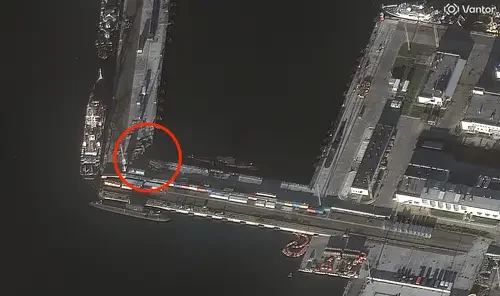
On 15 December 2025, SBU underwater drones Sub Sea Baby struck a submarine for the first time in history. The operation was a joint effort by the 13th Main Directorate of the SBU Military Counterintelligence Department and the Ukrainian Navy.
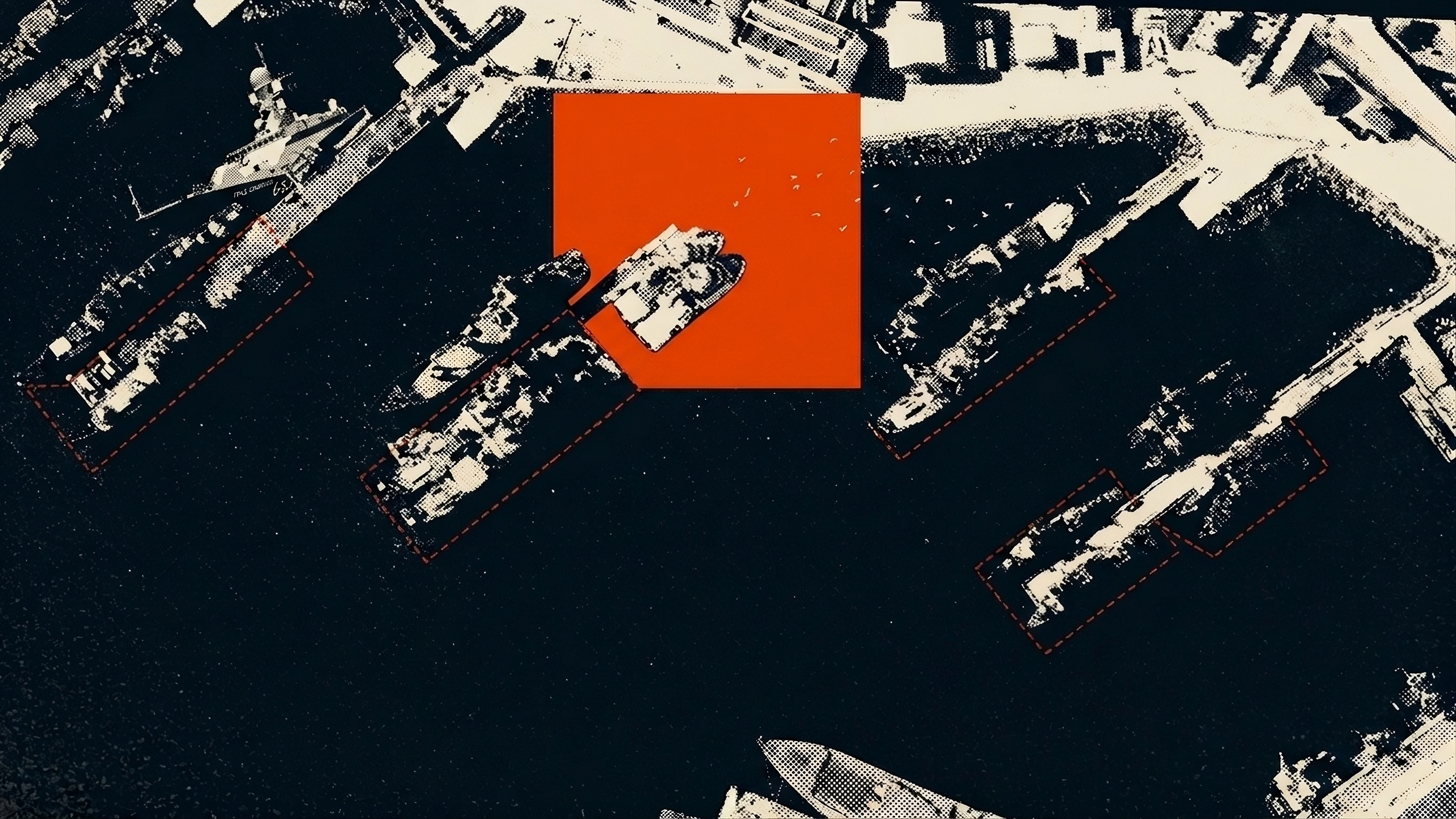
The submarine ended up at Novorossiysk for a reason: after surface drones and air strikes forced the fleet's ships and submarines out of Sevastopol Bay, the fleet relocated here. This is where all remaining combat-capable Varshavyankas became concentrated.
Satellite imagery from 16 December — Vantor (formerly Maxar) — captured the submarine and a significant crater in the jetty. Experts assessed that damage to the stern section had knocked out the rudder drives and other critical systems. The SBU qualified the damage as "critical" and the submarine as effectively put out of action. Defence Express noted: given the impossibility of repairing submarines in the Black Sea — this is tantamount to destruction. After the attack, Russia blocked the harbour entrance with barges and reinforced the boom barriers.
SummaryTwo Operational — and Nowhere to Repair
As of June 2026, Russia has two combat-capable Caliber-carrier submarines in the Black Sea: Veliky Novgorod and Stary Oskol, both at Novorossiysk. Alrosa is technically present but has never fired a shot. The rest of the brigade — destroyed, put out of action, or stranded outside the region.
No repair capability exists within the Black Sea. The next scheduled maintenance for both active submarines will mean either a risky transit to the Baltic, or continued accumulation of wear without servicing.
Sources
- Igor Delanoe — "Russia's Black Sea Fleet: Toward a Multiregional Force", CNA Occasional Paper, 2019, p. 4.
- Ibid., pp. 1–2.
- Ibid., p. 23.
- Lenta.ru, 27.07.2010 — on the export construction of Varshavyankas. Russian source; figures as claimed. lenta.ru
- The dfnc.ru weapons catalogue, entry on Project 636 (archived copy of 01.07.2022) — the weapons fit of third-modification Varshavyankas. Reference data as claimed. web.archive.org
- The slavikap blog on LiveJournal — "pr.877 / pr.636 — KILO / Improved KILO", 12.01.2013: a compilation of specifications, including the Caliber load-out. Non-specialist source; figures as claimed. slavikap.livejournal.com
- Interfax — Russian MoD announcements of Caliber launches from submarines in the Black Sea, 2022. Russian source; figures as claimed. interfax.ru
- Interfax — biographical details on Alrosa's commanding officer, Ivan Fyodorov. Russian source; figures as claimed. interfax.ru
- TASS — report on Alrosa being based at Sevastopol. Russian source; figures as claimed. tass.ru