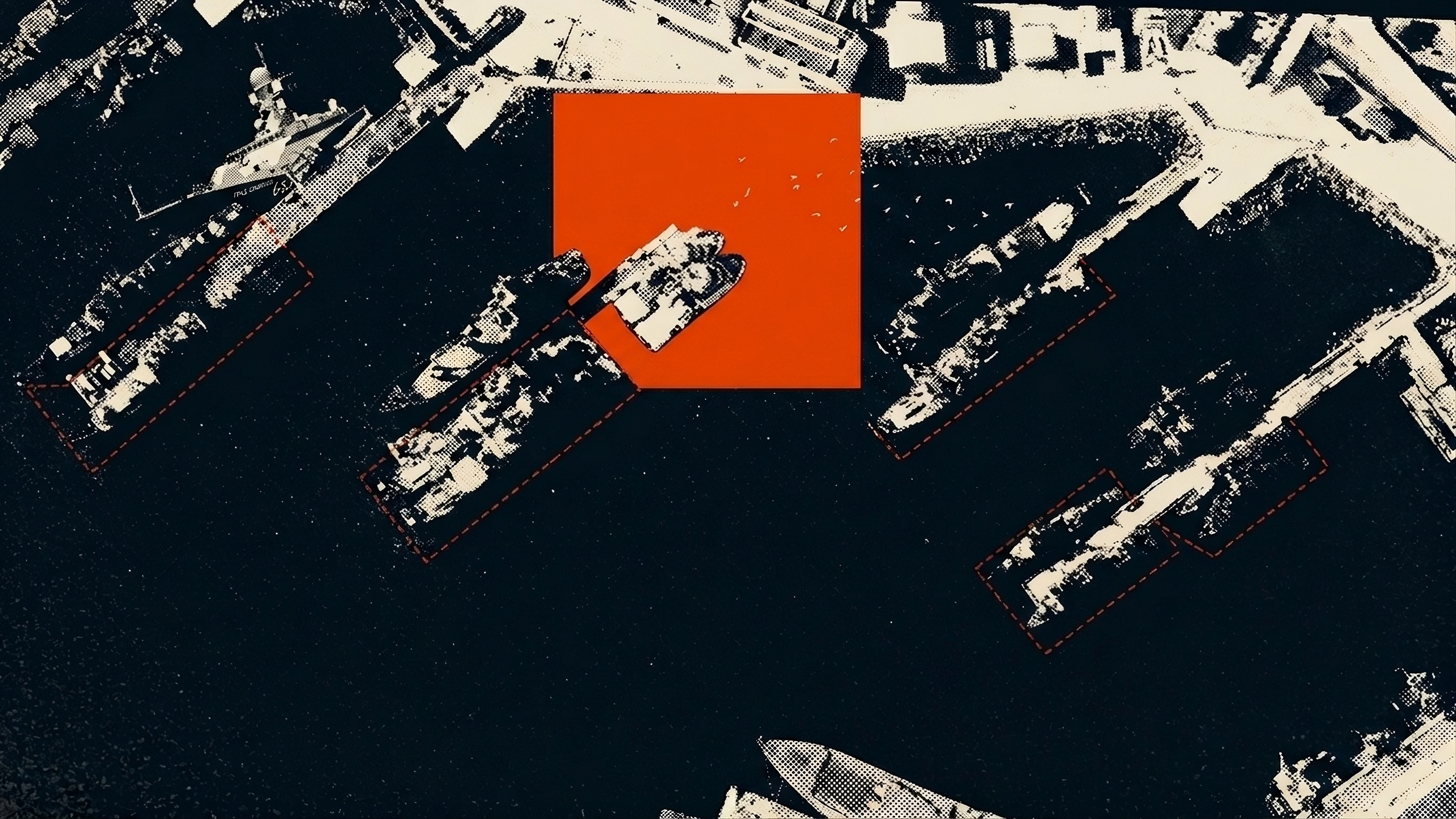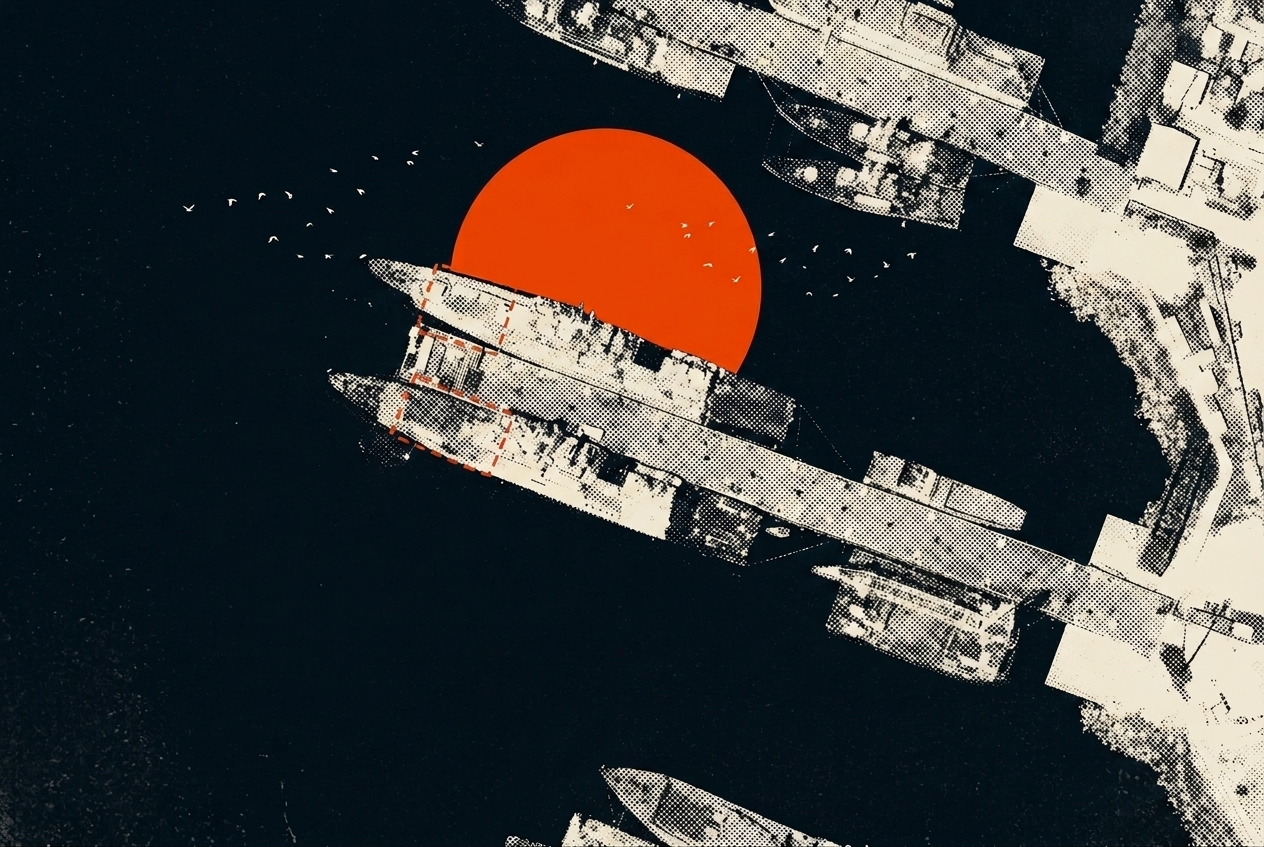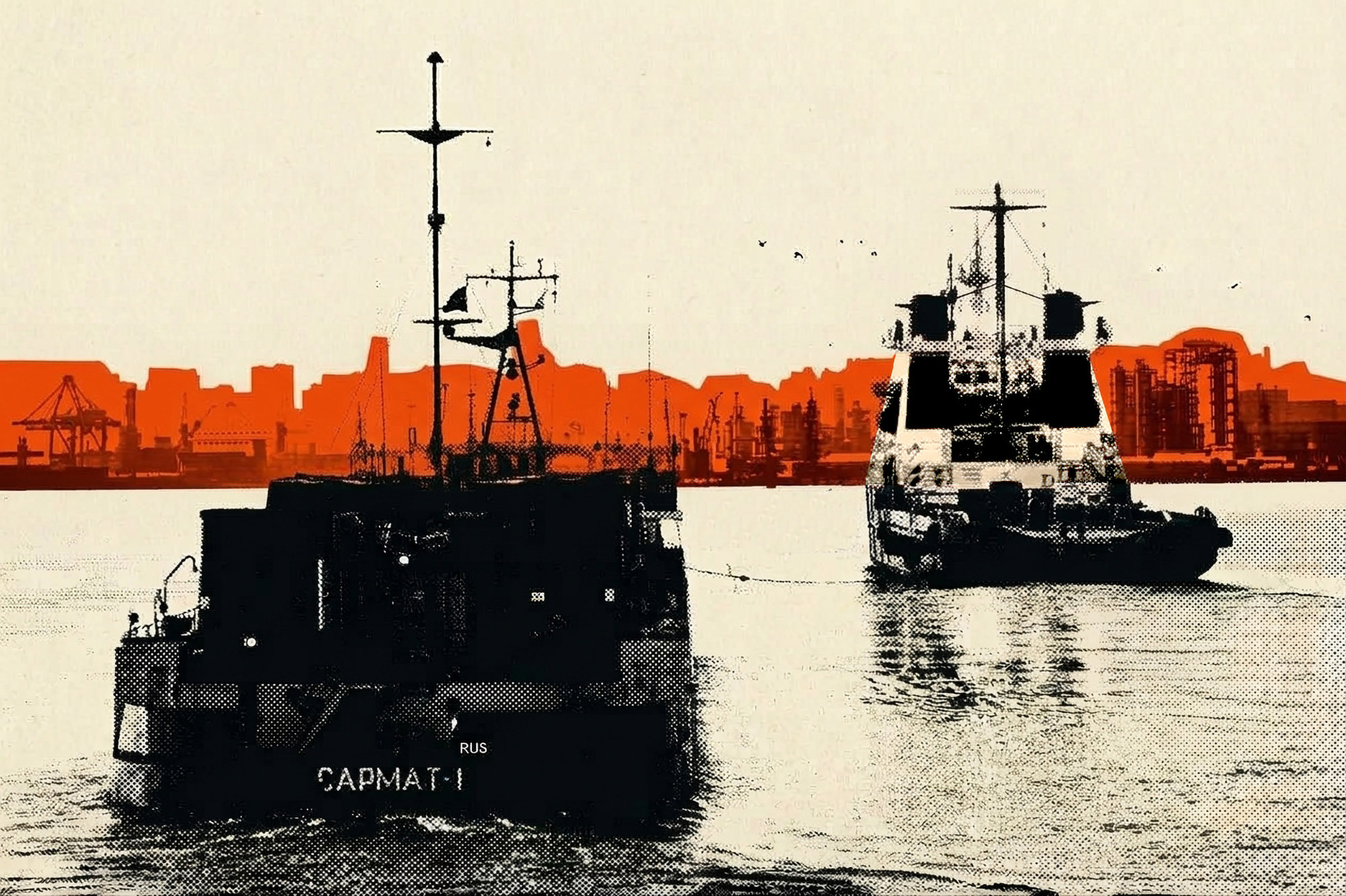
On the night of 10 September 2026 Ukrainian drones struck that port for the first time in the whole war[1]. The next night explosions were heard in Kaspiysk, fifteen kilometres to the south. That is where the Caspian Flotilla is based, whose ships hit Ukraine with the same Kalibr missiles as the Black Sea Fleet[2]. On the night of the 19th air defence was working over Kaspiysk again, and by morning Rosaviatsia had closed the airport at Makhachkala[3].
Three attacks in ten days. Unprecedented attention to a body of water that long played a secondary role in Russian logistics and was never a priority target for Ukraine. What changed? Why the Caspian now matters to Russia, and what Ukraine is after there — in this new piece from Plitka Analytics.
§ 00 · The seaWaters no foreign navy can enter
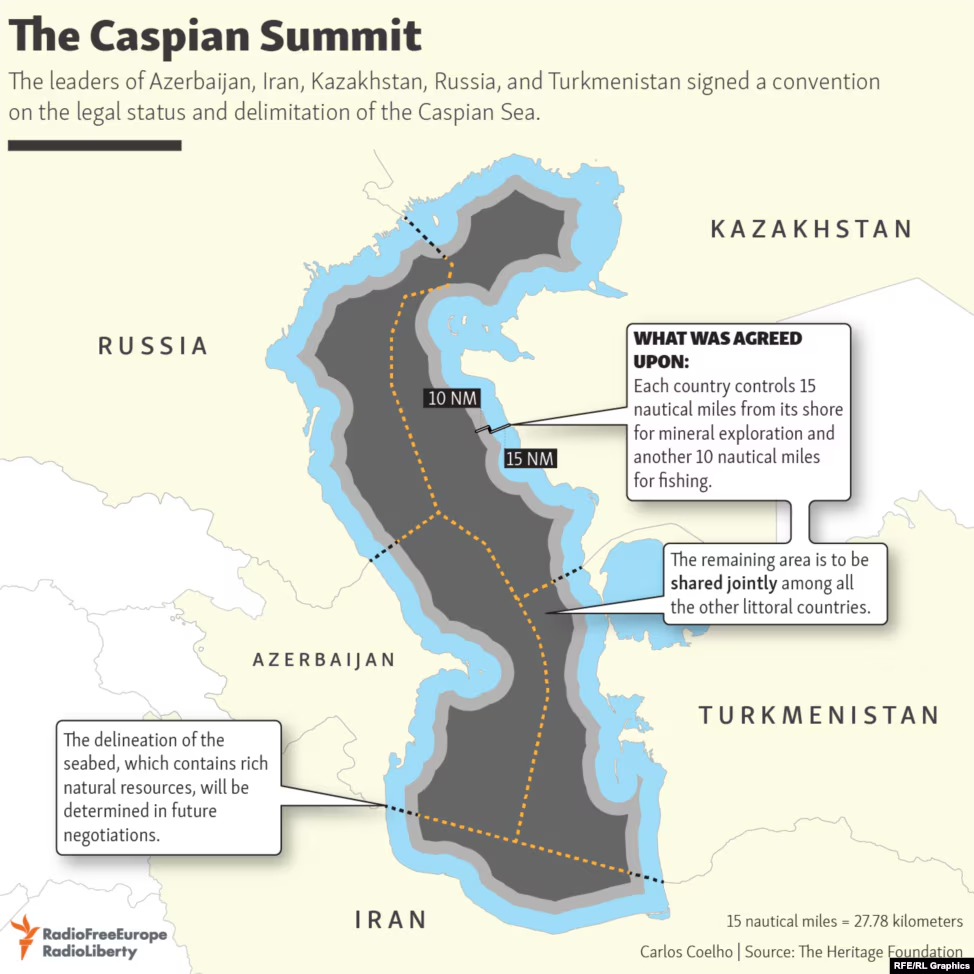
The Caspian is the largest enclosed body of water on earth, with an outlet to the ocean only through rivers and canals. Five states share its shore: Russia, Iran, Azerbaijan, Kazakhstan and Turkmenistan. Russia has three commercial ports — Astrakhan in the Volga delta, Olya eighty kilometres to the south and Makhachkalain Dagestan. The flotilla's naval base sits apart from them, at Kaspiysk.
Makhachkala stands out among them: it is the only ice-free deepwater Russian port on the Caspian, working year-round and taking both liquid and dry cargo. It is also a major node on the routes between Russia and Iran[4].
The Caspian is the only body of water of this size that an outside navy cannot enter, and that rests less on military strength than on legal agreement.
In 2018 the five littoral states signed the Convention on the Legal Status of the Caspian Sea at Aktau. It gave each of them 15 nautical miles of territorial waters and another ten miles of exclusive fishing rights, and left the division of the seabed to bilateral deals. The key provision is a different one: the convention expressly bans the presence of armed forces of states that have no Caspian coastline[5].
The Caspian has no international waters in the sense the UN Convention on the Law of the Sea gives the term. So the right of visit under its Article 110, on which interceptions of suspect cargo rest, does not apply either. Nor does the Proliferation Security Initiative, created precisely to stop arms shipments[5].
The Caspian connects to the Sea of Azov through the Volga-Don Canal — 63 miles and thirteen locks between two river systems. The canal is narrow: draught is capped at twelve feet, loading at roughly five thousand tonnes, and at three thousand on the shallow stretches of the Volga and the Don. In winter the canal freezes and navigation normally ends in December[6]. It is the only way a ship can pass from the Caspian into the Sea of Azov, and from there into the Black Sea.
The canal is not the only constraint on large-scale shipping. The Caspian is getting shallower, especially in the north, and that is why the flotilla's main base was moved from Astrakhan to Kaspiysk, while the largest ships had preferred to berth at Makhachkala since the mid-2000s. Work on the Kaspiysk base began only in 2017[2].
§ 01 · The flotillaForty-eight cells for Kalibrs
On 7 October 2015 ships of the Caspian Flotilla used the Kalibr-NK against targets in Syria for the first time. In 2022 the missiles flew towards Ukraine as well.
The flotilla's strike core is two Project 11661K patrol ships, and they differ markedly.Dagestan carries a 3S14 universal vertical launcher with eight cells for the Kalibr-NK family: a stated range of 375 km against sea targets and over 1,600 km against land targets. Tatarstan, commissioned in 2003, carries Kh-35 and Kh-35U anti-ship missiles of the Uran system with ranges of 130 and 260 km, the Osa-MA-2 air defence system and a 76 mm gun[2]. Tatarstan is not a Kalibr carrier.
The flotilla also has three Project 21631 Buyan-M small missile ships — Grad Sviyazhsk, Uglich and Veliky Ustyug — each with the same 3S14 launcher holding eight Kalibrs[2]. Together with Dagestan that makes thirty-two cells — what the flotilla's permanent complement can fire in a single salvo.
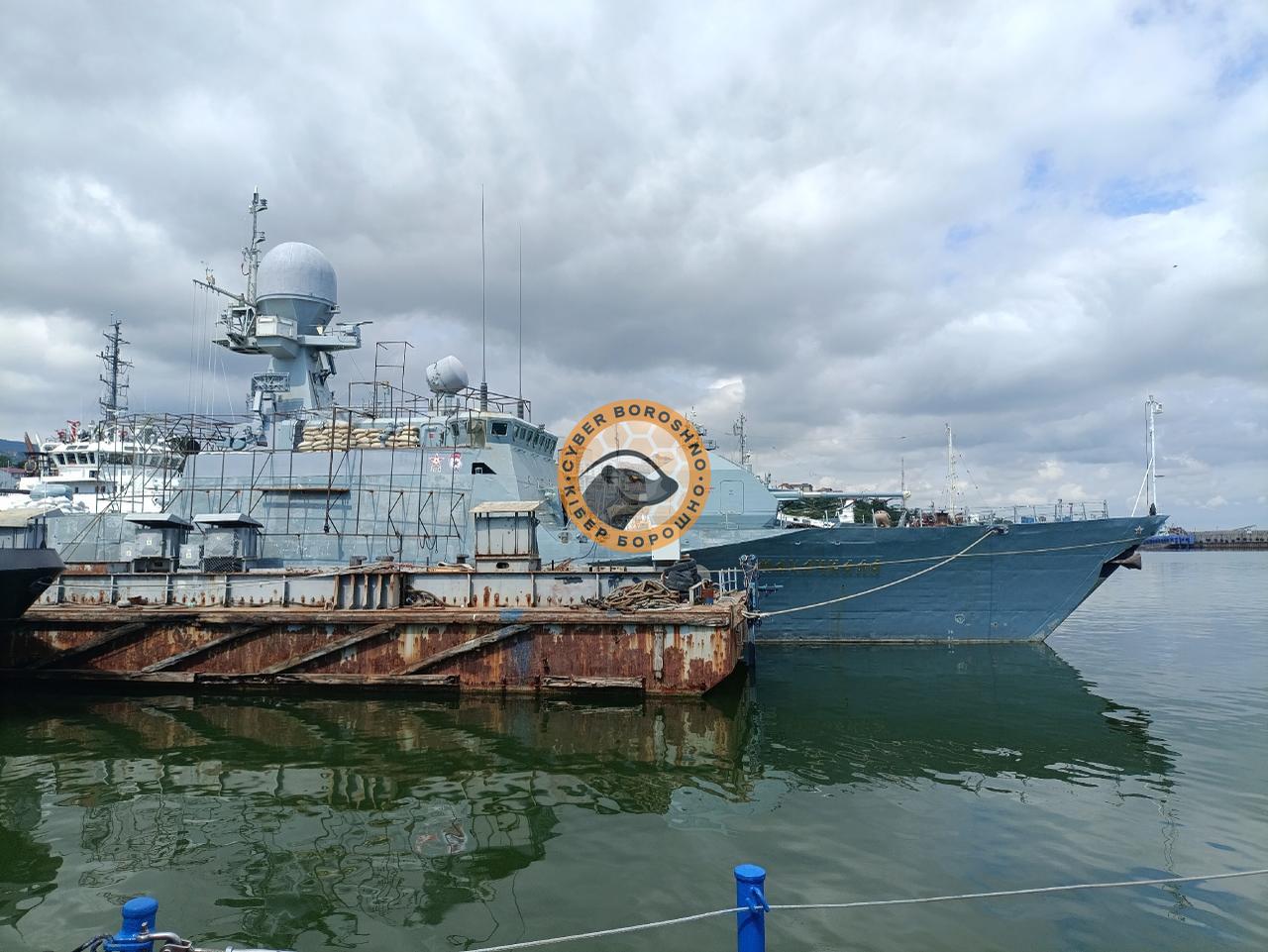
Two more belong elsewhere. Project 22800 Karakurt small missile ships — Tucha and Tayfun — are on the Caspian, each with its own eight-cell 3S14. Formally both are assigned to the Black Sea Fleet: these are ships that never reached “their” sea and stayed in a basin they were not meant for. How they got there is covered in the Karakurt chronicle.
With them included, up to forty-eight cruise missiles can be launched from the Caspian in a single salvo on one sortie.
Three more ships in the flotilla are also called Buyans, but carry no missiles at all. The Project 21630 small artillery ships — Astrakhan, Volgodonsk and Makhachkala — are armed with a 100 mm A-190 gun and a naval version of the Grad with a range of 5–20 km[2]. Buyan and Buyan-M are often confused even in official reports, so the difference is worth keeping in mind.
The Russians built the flotilla up specifically as a missile force. In 2014 its then commander, Vice Admiral Sergey Alekminsky, said the formation would have six Buyan-Ms by 2016. That did not happen: Zelyony Dol and Serpukhov went to the Black Sea, then around Western Europe to the Baltic[2]. In that series the Caspian turned out to be a donor rather than a priority.
The first Ukrainian strike on Kaspiysk came on 6 November 2024: ultralight drones covered some fifteen hundred kilometres and hit two ships[7]. Sources in Ukrainian military intelligence named both patrol ships — Tatarstan and Dagestan — as the targets; the British defence ministry spoke of “at least two, probably Gepard-class frigates”, while ISW noted that satellite imagery did not clearly confirm damage to those particular ships. That episode is examined in detail in the frigate chronicle.
Then a year and more with no result. A second attack on 30 November 2024 produced no confirmed hits, nor did the strike on the base on 1 December 2025. In mid-December 2025 the focus shifted away from ships to oil production altogether: the Filanovsky and Korchagin platforms, the vessels Kompozitor Rakhmaninov and Askar-Saridzha, and the patrol ship Okhotnik.
Strikes on missile carriers resumed only in the spring of 2026. On 7 May 2026 the General Staff confirmed a hit on a Karakurt small missile ship near the Kaspiysk basing point; the extent of the damage was not stated at the time[8]. On 15 May a small missile ship and a minesweeper were reported hit at the same naval base[9], and on the 17th a border patrol ship in the port alongside[10]. On 25 July the Security Service's target list included a Project 12418 missile boat[11]. On 11 September OSINT analysts reported a probable hit on Tatarstan[12].
Set that list against the composition of the force and it shows that, of all the Kalibr carriers, the ones definitely hit were only the Karakurts — that is, precisely the two ships that came here from the Black Sea. The General Staff stated plainly at the time that the ship hit was a Kalibr carrier; which of the two, Tucha or Tayfun, was never officially named[13].
The rest of what was hit carried no Kalibrs, not even potentially. Tatarstan, the minesweeper, the border and missile boats are escort and support ships. From what we have tracked on frigates and small missile ships, no destruction of a Caspian missile carrier has been confirmed over the course of the war.
On 20 September, however, an anonymous Telegram channel, “An Absolutely Reliable Source”, reported that on the night of the 19th the VTR-79 was damaged at Kaspiysk — a Project 20360 naval armament transport used to load missiles and ammunition onto warships — and that the real target had been Dagestan, moored alongside[14]. A vessel of that name does exist and is listed among the flotilla's auxiliaries[2]. How critical the loss or damage of the VTR-79 would be is hard to judge for now.
The force has plans for the future, but no certainty. At the Army-2022 forum the Ak Bars corporation showed a model of the Project 21635 small missile ship, an enlarged Buyan-M of 1,400 tonnes whose cruise missile load grows to sixteen cells instead of eight. Whether the navy will order such ships, and whether they would reach the Caspian, the Russian account does not say[2].
The nearer prospect is more modest. The Buyan-M series ends with Stavropol, which was to be delivered to the Caspian back in 2024[2]. Open sources do not show whether it reached the flotilla, but if it does, the permanent complement gains another eight cells.
What limits these plans is not shipbuilding but the water itself. A sea that keeps getting shallower forces any new fleet into the same depths.
§ 02 · Military cargoThe gateway to Iran
Russia received its first batches of Shaheds by sea across the Caspian, back at the start of the full-scale war[15]. In 2024 the US Treasury assessed that the Russian defence ministry had used the vessel Port Olya-3 to carry short-range ballistic missiles from Iran[15].
On 14 August 2025 Ukrainian special operations forces hit the dry cargo ship Port Olya-4 near the port of Olya in Astrakhan region. The vessel partly sank. It was carrying Shahed components and ammunition from Iran; according to MarineTraffic it was off the Iranian coast on 1 August, set out for Russia on the 12th, and on the 14th it was gone[16]. The governor of Astrakhan region, Igor Babushkin, put the damage down to “debris from drones, all of which were shot down”[16].
Port Olya-4 is owned by MG-Flot, formerly TransMorFlot, linked to the Astrakhan businessman Jamaldin Pashayev. His companies have been carrying Russian military exports since 2021 and have signed over 200 contractsfor arms shipments in that time. According to Ukraine's Main Intelligence Directorate, Pashayev and his firms are part of the supply chain of Alabuga, the plant where Shaheds are assembled. The United States added Port Olya-4 to its sanctions list in September 2024; MG-Flot has 26 vessels[16].
The carriers are old ro-ros and dry cargo ships that routinely switch off their automatic identification systems to hide calls at Iranian and Russian ports. Formally that breaches the Convention for the Safety of Life at Sea — but there is no one here to enforce it[5]. Our own attempts to trace the arms logistics ran into exactly this. Ships with military cargo prefer to go unnoticed.
Over ninety per cent of ocean tonnage is insured by the International Group of P&I clubs, which risk US, UK and EU sanctions if they take on risky clients — so Caspian operators have moved to state mechanisms: Russia's Ingosstrakh and Iran's Kish P&I Club[5].
If a ship carrying ammunition blows up or spills oil, it is the neighbours who will find out how solvent that insurance is — Azerbaijan, Kazakhstan and Turkmenistan, for whom the Caspian is a link in the Trans-Caspian route to Europe[5].
These ships mostly transship at the port of Olya. The port was promoted and built up as a key node of the North–South corridor, that is, of trade with sanctioned Iran[16].
In the summer of 2026 the arms traffic between the two countries reversed. On 18 August, citing a European government document, it emerged that Russia is now sending Iran explosives, ammunition and drone components, so that Tehran can replenish stocks after the US and Israeli strikes[19].
In January 2026 the Iranian vessel Caspian Shiva was reported damaged on the Caspian[20]. And on the night of 25 July the Security Service of Ukraine reported its widest operation in these waters to date: hits on the Filanovsky oil production platform, the dry cargo ships Port Olya-2 and Begey, and a Project 12418 Molniya missile boat[11]. Ukraine's president said the targets included “vessels carrying military cargo from Iran, and also a warship”. Iran said the ship hit was a commercial vessel of its own carrying iron, en route from Astrakhan to Anzali, and that one sailor was killed and three more wounded; Tehran did not name the ship.
The presence of a warship on that list is not incidental: the flotilla increasingly works as an escort for the corridor's cargo.
The governor of the Iranian province, Hadi Haghshenas, called the Astrakhan–Anzali route “a safe and reliable corridor for commercial exchange”; Iranian foreign ministry spokesman Esmaeil Baghaei said that “Ukraine's dangerous adventurism will certainly not go without our response”, and Ukraine's chargé d'affaires was summoned to the Iranian foreign ministry[15].
The Caspian leg, as part of the North–South transport corridor, is strategically important for Russia's development after the loss of the Western market. This is the route meant to link Russia, Iran, Central Asia and India while bypassing Europe and China. The project is overseen by Nikolai Patrushev as head of the Maritime Board, and Putin personally called a meeting on the corridor's future[7].
§ 03 · After MolochkaMadyar
On 6 July 2026 the Unmanned Systems Forces began an operation named Molochka. In the first nine days, from 6 to 14 July, 116 vessels of the so-called shadow fleet were hit in the Sea of Azov[21]. As of 22 September, after eleven weeks, the tally stood at 300 craft: 134 in the Sea of Azov and 166 in the Black Sea[13].
The target was not merchant shipping at random but one specific link in the oil export chain — feeder tankers of the river-sea class, Volgoneft, Sanar and Primomax types, with a capacity of about 7,000 tonnes. They load refined products at inland refineries — Volgograd, Samara, Saratov — and run down the Volga-Don Canal into the Sea of Azov[22].
The Azov is shallow and cannot take 100,000-tonne ocean tankers. So the feeders go out through the Kerch Strait and pump their cargo into large ships — at Port Kavkaz or nearby, in Black Sea waters. Filling one ocean tanker takes fourteen or fifteen such runs[22].
The volume of that work was growing right before the strikes: where May saw 40–50 feeder tankers in the Azov, June saw more than a hundred[22].
About 20% of Russian crude is exported through the Azov–Black Sea region, according to Captain 2nd Rank Dmytro Pletenchuk, spokesman for the Ukrainian Navy[21]. Temporarily occupied Crimea needs, by Putin's own account, at least 70,000 tonnes of fuel a month, and the shallow Azov was the main route for that supply[22]. Azov ports also handled up to 10 million tonnes of grain for export — almost a quarter of all Russian grain shipments[22].
“The ‘three hundredth fleet’ is a suitcase without a handle and a torment for the worm-ridden budget. The Sea of Azov is at a standstill and will stay that way, along with the Kerch Strait. In the northern and north-eastern Black Sea the regime is ‘maybe we'll slip through’. Molochka in action”[13]
Major Robert “Madyar” Brovdi, commander of the Unmanned Systems Forces, 22 September 2026
Satellite radar imagery as of 14 July showed the number of tankers and dry cargo ships remaining in the zone had fallen several times over against the period before the operation[21]. In August sanctioned tankers began fitting anti-drone nets, metal structures and water tanks[23].
After thirteen vessels were hit, ten of them tankers, shipping through the Don-Azov canal and the Kerch Strait was temporarily suspended[24]. In five days 48 vessels in all were hit in the Sea of Azov, and on 10 July the Unmanned Systems Forces reported another thirteen shadow-fleet tankers. Defense Express estimated that about a hundred and twenty vessels remained at sea, mostly dry cargo ships[24].
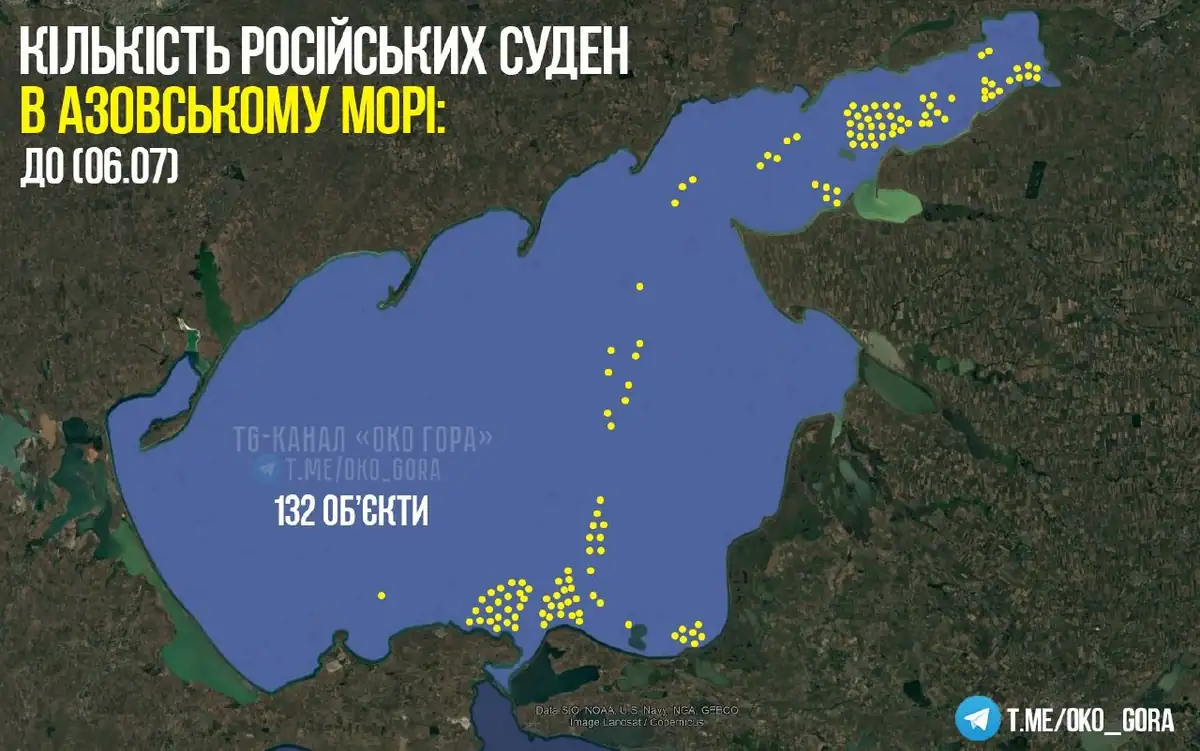
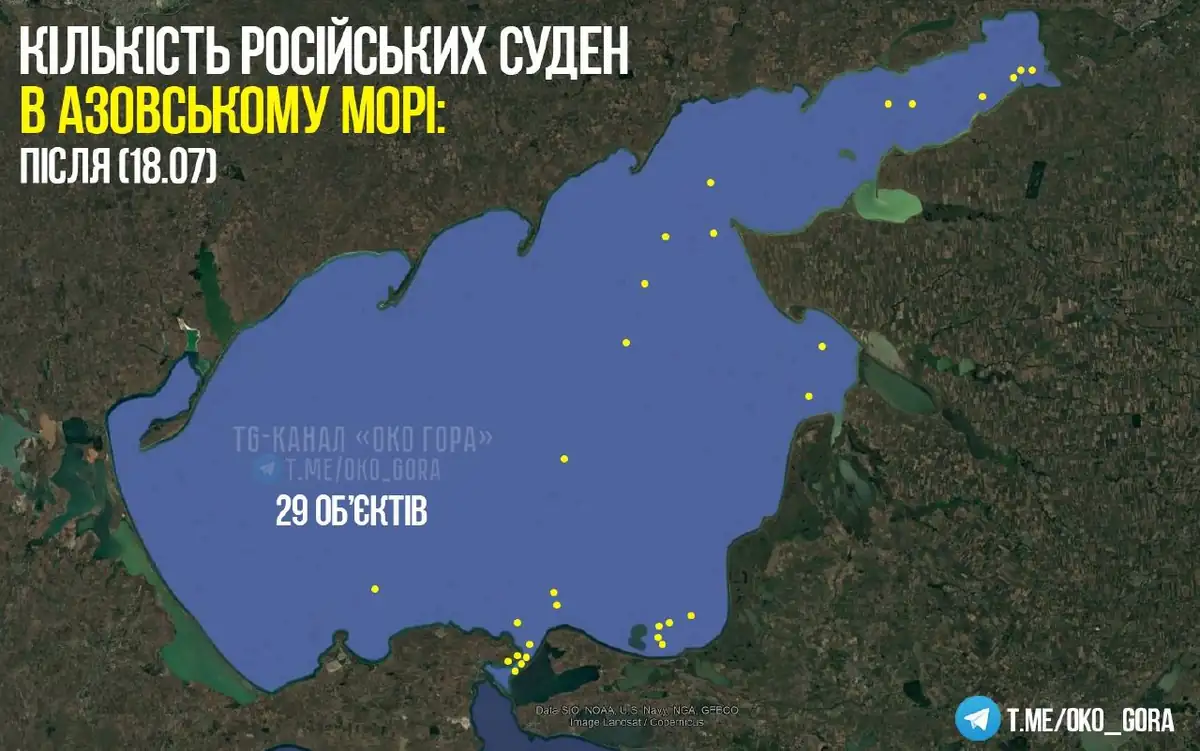
According to the Volga-Don Basin Inland Waterways Administration, 14.1 million tonnes passed through the canal in the 2020 navigation season. In 2025 it was already 4.5 million, with 3,251 vessel transits. And in the first four months of the 2026 season, 1.813 million tonnes and 1,182 vessels[25].
In June 2026 the canal passed 474,000 tonnes and 311 vessels; in July, 299,000 tonnes and 197 vessels. A drop of 36.92% in a month. The Russian outlet that published the figures put the reason in its headline: “Ukrainian drones are to blame”[25].
Nobody struck the canal itself. The canal carried that same feeder fleet, and once the Azov stopped being passable there was no one left to sail it and nowhere to sail to.
In August 2026 Russia's transport ministry set up an operational headquarters to coordinate shipping in the Sea of Azov, because of drone attacks on vessels. Its task was worded as follows: “to find alternative logistics routes and redistribute cargo flows between different modes of transport”[25]. This is not an outside analyst's judgement but an administrative act of the Russian government: the search for alternative routes became a separate task with a headquarters of its own.
In 2025 the port of Makhachkala handled 3.5 million tonnes — 6.5–8% more than the year before. Growth, then, but modest. In 2026 the pace changed abruptly: 1.4 million tonnes in the first four months, up 48%; 2.11 million over the half-year, up 50%; over 2.9 million in eight months, up 42.5%[1].
What drives that growth is liquid cargo — crude oil and refined products. 1.5689 million tonnes of it passed through in the first half of the year, almost twice as much as a year earlier[1]. That is almost three quarters of everything moving through the port.
Trade sources name the reason for the jump directly: pressure on Russian shadow-fleet vessels in the Black Sea and the Sea of Azov forced a search for alternative routes[1]. Fuel that used to take the familiar southern lanes went where Ukrainians find it harder to reach.
The two sets of figures look as if they contradict each other: the port up 50%, the canal down threefold. In fact they describe different directions. What is drying up is movement westward, through the canal into the Azov and on into the Black Sea. What is growing is movement straight across the Caspian — to Iranian ports, from which the cargo continues overland and by rail[7].
So Molochka did not stop Russian oil exports; it changed their direction. The Sea of Azov and the Kerch Strait are effectively closed to the Russian cargo fleet, yet the overall flow that used to pass that way has not gone anywhere and is looking for other routes.
The road it found is worse than the old one on almost every count. On the Volga-Don Canal a ship takes about five thousand tonnes, and on the shallow stretches of the Volga and the Don only three[6]. In winter the canal freezes and navigation halts until spring. Makhachkala remains the only ice-free deepwater port on the Caspian, but from there the cargo does not transfer to an ocean tanker; it sets off along the Iranian railway[7]. The same fuel arrives more slowly and in smaller lots, and to some buyers it does not arrive at all.
This reorientation has a flip side. The cargo moved not merely to another sea, but to the one sea where every operation carries a diplomatic price, because of three littoral states that keep working relations with both Moscow and Europe. Ukrainian strikes pushed Russian fuel into the region's best-protected waters.
The strikes on Makhachkala and Kaspiysk on 10, 11 and 19 September are a continuation of that same Molochka, which followed the cargo into a new sea.
ConclusionThe Caspian knot
Every function of the Caspian examined here has been transformed over the course of the war, and each of them has had a direct bearing on Russia's ability to wage it. Most of the threats have still not been neutralised, and they have adapted to conditions in which Ukraine can reach targets in the region.
The commercial line changed the most, taking over a substantial share of the functions of ports in the neighbouring sea. Military logistics lost three cargo vessels in a year, among them one carrying Shahed components, but did not slow down. And the Kalibr launchers still pose a serious threat. The flotilla remains combat-capable, and the growing reach of our strike systems has not changed that so far.
So September's strikes are most likely not the last. Hitting targets on the Caspian remains necessary, and will therefore continue. For our part we can wish the Defence Forces luck, and we will keep watching the region.
Sources
- Militarnyi — “Ukrainian Drones Strike Makhachkala Port on the Caspian Sea for the First Time”, 10.09.2026. Port throughput for 2025–2026; the fire confirmed by the Russian side. militarnyi.com
- Caspian Institute — “The Caspian Flotilla: current state and prospects”. Composition and armament of the flotilla, the move of the base to Kaspiysk. Russian source, figures as claimed. caspian.institute
- Militarnyi — “Dagestan Attacked by Drones, Explosions Heard Near Port of Kaspiysk”, 19.09.2026. Restrictions at Makhachkala airport; figures as claimed by the Russian defence ministry. militarnyi.com
- The New Voice of Ukraine — “Explosions reported near Russia's Caspian Flotilla base in Kaspiysk”, 19.09.2026. english.nv.ua
- Jerusalem Center for Foreign Affairs — “Dark Waters: How Russia and Iran Weaponized the Caspian Sea”, 26.08.2026. The 2018 Aktau Convention, the inapplicability of the right of visit and of the PSI, the shadow fleet and insurance. Israeli think tank. jcfa.org
- The Maritime Executive — “Russia Invests in Volga-Don Canal as Trade With Iran Booms”, 21.12.2022. Structural limits of the canal; the financial figures in the source are as of 2022. maritime-executive.com
- RUSI, Emily Ferris — “The Iran-Israel War Presents a Problem for Russia's Military Supply Chains”, 01.05.2026. Nodes on the route, the rail leg of the North–South corridor, the March Israeli strike and the Kremlin's response. rusi.org
- LB.ua — “General Staff confirms hit on Russian missile ship and ammunition depot”, 07.05.2026. A Project 22800 Karakurt small missile ship hit near the Kaspiysk basing point. lb.ua
- Militarnyi — “Small Missile Ship and Minesweeper Struck at Kaspiysk Base”, 15.05.2026. militarnyi.com
- UNIAN — “Ukraine hit a Russian border patrol ship in a Dagestan port”, 17.05.2026. unian.ua
- ArmyInform — “The SBU staged a ‘night raid’ on Russia: air defence, a missile boat and ships with military cargo hit”, 25.07.2026. armyinform.com.ua
- Oboronka (Mezha) — “Defence Forces probably hit the flagship of Russia's Caspian Flotilla”, 11.09.2026. Reporting a message from the OSINT project Exilenova+. oboronka.mezha.ua
- ArmyInform — “In 11 weeks the USF hit 300 vessels of the Russian ‘shadow fleet’”, 22.09.2026. The operation's tally and a quote from the USF commander. armyinform.com.ua
- Telegram channel “An Absolutely Reliable Source”, post of 20.09.2026 on the VTR-79. Anonymous source; cited with its character stated, no independent confirmation. t.me
- CNN — “The Iran and Ukraine wars are colliding on the world's biggest lake”, 27.07.2026. The positions of Kyiv and Tehran on the July strikes; the US Treasury assessment of Port Olya-3. cnn.com
- Militarnyi — “Russia Loses First Ship Transporting Ammunition and Shahed Drone Parts From Iran”, 15.08.2025. MarineTraffic data; MG-Flot ownership, the Alabuga link per Ukrainian military intelligence. militarnyi.com
- The Maritime Executive — “Russian Military Cargo Vessel Attacked in the Mediterranean”, 07.09.2026. MG-Flot's registered address. maritime-executive.com
- Tech Times — “Ukraine Drones Strike Lady Mariia: Russia's Weapons Ship, Not Oil Tanker”, 07.09.2026. Sanctions status of the vessel and its operator. techtimes.com
- UNITED24 Media — “Russia Has Started Supplying Explosives to Iran to Replenish Weapons Stocks”, 18.08.2026. united24media.com
- Militarnyi — “Iranian Vessel Suffers Damage of ‘Unknown Origin’ in the Caspian Sea”, 29.01.2026. militarnyi.com
- ArmyInform — “The occupiers' southern bridgehead is suffocating: how Molochka turned the Sea of Azov into a trap for the Russians”, 16.07.2026. The first nine days of the operation, SAR data, comment from the Ukrainian Navy spokesman. armyinform.com.ua
- NV — “Operation Azov. Greetings to Russian tankers from Madyar”, 07.2026. Signed analysis: the mechanics of the feeder fleet, volumes and consequences. nv.ua
- Slovo i Dilo — “Madyar said how many shadow-fleet vessels were hit in the Sea of Azov and the Black Sea”, 22.09.2026. The start date of the operation, anti-drone protection on tankers. slovoidilo.ua
- The New Voice of Ukraine — “Russian ship numbers in the Sea of Azov may have halved since July — ISW”, 07.2026. Starboard Maritime Intelligence data in the ISW report; the suspension of shipping through the canal and the strait per Reuters; the Defense Express estimate. english.nv.ua
- Bloknot-Volgodonsk — “Ukrainian drones are to blame: Volga-Don Canal throughput fell 37% in a month”, 17.08.2026. Figures from the Volga-Don Basin Administration; Russian source, figures as claimed. bloknot-volgodonsk.ru